
Project Overview
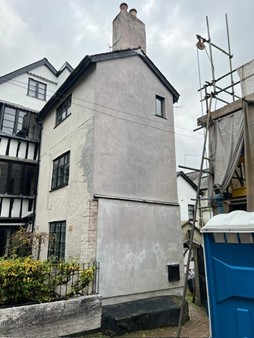
Location: Residential property, pre-1960s construction
Incident: Soot contamination from neighbouring property fire
Surface Type: Textured external render
Objective: Restore the façade to pre-incident condition

Background
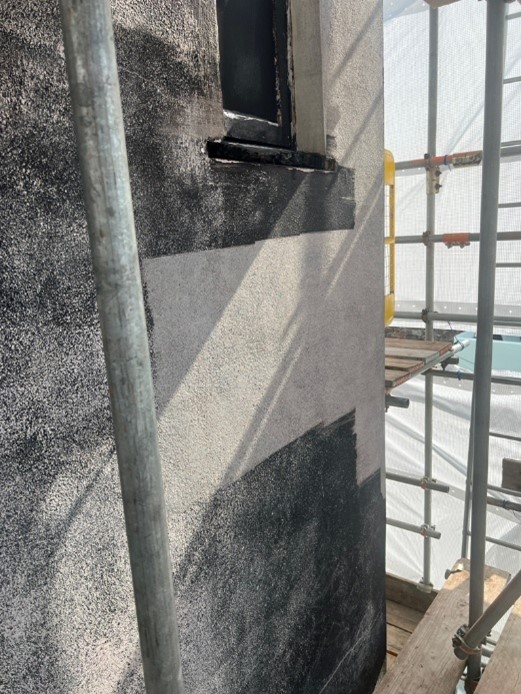
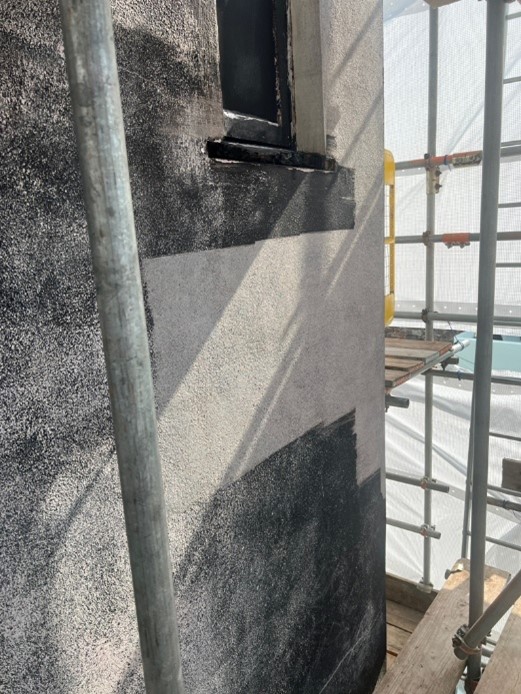
Following a neighbouring fire, a pre-1960s residential property suffered severe soot contamination across its heavily textured exterior render.
Traditional cleaning techniques, such as dry sponges or mild chemical washes, were unlikely to reach deeply embedded soot without damaging the surface or leaving visible staining.
Richfords was appointed to deliver a safe, effective, and sustainable restoration. This project provided the opportunity to deploy advanced laser cleaning technology—a dry, contact-free solution that delivers precise soot removal without chemicals or water.
The Challenge
Older, textured render poses a unique challenge after smoke exposure. Soot binds tightly to rough surfaces, and traditional cleaning can cause:
• Abrasion or surface discolouration
• Multiple cleaning passes with inconsistent results
• Significant material waste from used sponges and wipes
• Longer project durations and increased claim costs
A more controlled, environmentally responsible approach was required to meet the project’s quality and sustainability goals.
The Solution
Richfords utilised two 100W laser cleaning units to treat the property’s exterior render.
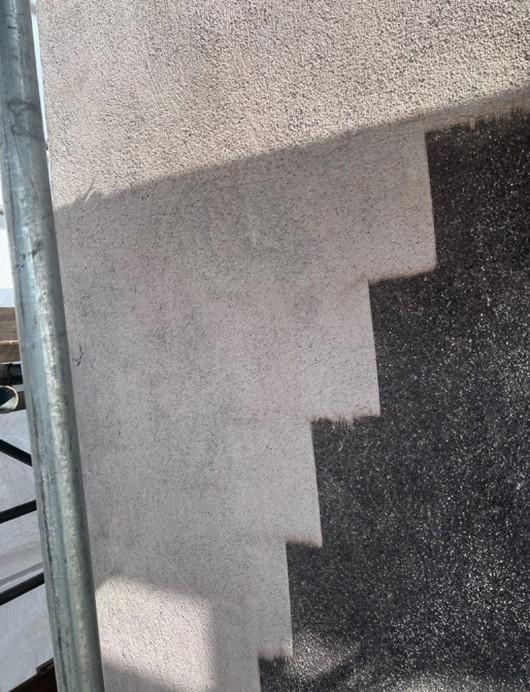
The lasers emit focused light energy that vaporises soot particles on contact, converting them into fine dust for easy removal. Because the process is entirely dry and non-contact, it protects the surface texture and colour while producing no chemical or water runoff.
Working systematically across all elevations, the team adjusted laser settings to suit each area’s level of contamination, ensuring an even and thorough clean throughout.
The process was quiet, contained, and required no on-site water or chemical handling.
Results
• 75% faster completion time than conventional cleaning methods
• Zero use of water or chemicals, eliminating secondary staining
• 95% reduction in waste materials (no disposable sponges or wipes)
• High-quality, uniform finish across the entire façade
• Positive feedback from the insurer and property owner for quality, efficiency, and sustainability
Comparison Table
| Aspect | Traditional Methods | Laser Cleaning |
| Surface Type | Textured render | Textured render |
| Cleaning Duration | 10 Days | 4 Days |
| Waste Generated | High (sponges, wipes) | Minimal (fine dust only) |
| Surface Damage Risk | Medium–High | Low – non-contact process |
| Water / Chemical Use | Required | None |
| Environmental Impact | High material and waste output | Significantly reduced |
| Result Consistency | Variable | Uniform and precise |
| Cost Savings | Baseline | 25-40% reduction |
Conclusion
This project highlights how laser cleaning delivers a superior result for fire-damaged exteriors, particularly on older properties with intricate or textured finishes.
By using this advanced technology, Richfords achieved:
• Faster project turnaround
• Zero-waste, chemical-free cleaning
• Outstanding restoration quality that aligns with insurers’ sustainability goals.
• Laser cleaning represents the future of fire remediation — precise, efficient, and environmentally responsible.